Water Safety for Kids: 12 Things Every Parent Should Know
Drowning is fast, silent—and preventable. As summer unfolds, make sure water safety is top of mind for your family. We spoke with three local experts (and moms!) about the life-saving habits every parent should know. From swim lessons to supervision tips, this is guidance every caregiver needs before heading to the pool, lake, or beach.
Water Safety for Kids: 12 Things Every Parent Should Know
Last updated 5/22/26
As temperatures rise and summer fun kicks off, it’s no surprise that families are heading to pools, lakes, and beaches to cool down and create lasting memories. But water fun comes with serious risk, especially for young children. Drowning is the leading cause of accidental death in children ages 1 to 4 and the second leading cause for children ages 5 to 14 (CDC). These numbers highlight why a proactive approach to water safety is critical for families, not only during the summer months, but all year long.
We asked Dr. Suzanne Wolf and Kaya Merzlak, CRNP, of Connected Health, along with Courtney Artisti, certified lifeguard instructor for Ellis & Associates ILTP and Assistant General Manager of Goldfish Swim School in Wexford, to share their top water safety insights. As healthcare and swim safety experts—and moms themselves—they offer valuable guidance every family should know this season.
1. Drowning is the #1 cause of accidental death in kids under 4.
It’s a devastating statistic, but one that should motivate us to take every precaution: children can drown in as little as 2 inches of water, and it can happen in seconds—without a sound.
According to Dr. Wolf, supervision is the cardinal principle of drowning prevention, but it must be understood as more than simply “watching.” Effective supervision includes attention, proximity, and continuity. For toddlers and young nonswimmers, “touch supervision” is essential, meaning an adult should remain within arm’s reach and fully focused at all times.
But supervision isn’t the only tool we have. Formal swimming lessons have been shown to reduce the risk of drowning by 88% in children ages 1–4. “It’s nice to have fun with family and friends at the pool on a hot summer day, but drowning is silent and it is fast,” said Artisti. “Learning something as simple as floating on your back or treading water is something that can save your child’s life.”
2. Always have a "water watcher".
Whether you're at the pool, lake, or even in the backyard with a kiddie pool, a responsible adult should always be designated as the “water watcher”, even if a professional lifeguard is present. That supervision must be distraction-free (yes, that means putting the phone down). A child can slip underwater in the time it takes to answer a text or grab a towel.
Artisti emphasizes the importance of assigning a dedicated water watcher at every gathering.
“To avoid the ‘bystander effect,’ it is vital to have one person whose sole responsibility is watching the water, ideally rotating that role among adults,” said Artisti.
She also shares a key safety principle used by Goldfish Swim School and its lifeguards: “If you don’t know, GO.”
Artisti explains that a child may appear to be playing or jumping but could actually be in distress. The “If you don’t know, GO” rule is a fundamental safety practice for lifeguards, meaning that if there is any uncertainty about whether a swimmer is struggling—or whether something seen underwater may be a person—immediate action should be taken rather than waiting for confirmation.
3. Don’t rely on floaties.
Water wings, puddle jumpers, and inflatable floaties may seem convenient, but they can create a false sense of security—for both children and adults. These devices are not substitutes for swimming ability, Coast Guard–approved life jackets, or active supervision.
Young children who regularly wear flotation devices may begin to believe they can swim or stay afloat independently when they cannot. This can lead them to take risks, venture into deeper water, or panic if the device slips off or is removed.
Kaya, CRNP, emphasizes the importance of using properly fitted, Coast Guard–approved flotation devices when boating or spending time around open water, especially for young children and inexperienced swimmers.
4. Even kids who can swim need to be watched.
Learning to swim is essential, but it doesn’t eliminate the risk of drowning. Even strong swimmers can become tired, disoriented, or caught in currents. Children should always be closely supervised in or around any body of water.
Artisti also recommends implementing mandatory swim breaks. For example, taking a 15-minute break after 45 minutes of swimming gives children time to rest, hydrate, use the restroom, and reapply sunscreen.
This simple routine not only supports water safety but also helps prevent fatigue and overheating during long days in the sun.
5. Choose Bright Bathing Suits
The color of a swimsuit can make a huge difference in how visible someone is in the water. Opt for neon or brightly colored swimwear, especially in natural bodies of water where visibility is lower. Avoid blues, greens, and other shades that can blend in with the water.
6. Stick with swim lessons.
Swim lessons are one of the best investments you can make in your child’s safety. But consistency is key. Dropping lessons for a few months in the summer can lead to regression.
“Swimming recreationally vs. structured lessons are two very different things,” said Artisti. “The consistency of the swim strokes and water safety skills every week are something that can actually disappear during recreational swimming if you do not keep practicing.”
She added, “Regression is something we see too much of when kids leave the program for just a few months in the summer. Swim lessons are seen by many as an extracurricular activity—but it’s the only activity that can save your child’s life.”
7. The goal isn’t just strokes—it’s survival.
At Goldfish Swim School, all kids start out the same, learning what to do if they fall into a body of water and they cannot get out,” said Artisti. “We want these kids to learn to float on their back, to learn breath control, and how to get back to the closest wall (the one they fell off of). They learn all of these things through the Science of Swim Play.”
8. The safest way to prevent drowning? Layers of protection.
No single safety measure is foolproof, but when combined, they create a strong defense. Key layers include swim lessons, close and constant supervision when around water, pool fences, safety covers, alarms, and CPR training. Each layer plays a critical role.
Dr. Wolf notes that four-sided isolation fencing that completely separates the pool from the home and yard is one of the most effective drowning prevention interventions and can reduce toddler drownings by up to 83%.
Kaya also recommends installing alarms around pool fences and doors to help prevent children from accessing the pool area unsupervised.
Additional safety measures include removing toys from the pool area after use and emptying kiddie pools, buckets, and other standing water containers promptly.
Each layer plays a critical role and forms a powerful defense. Just like seatbelts, sunscreen, or smoke detectors, water safety works best when it's built into your routine.
9. Teach kids what to do in an emergency.
Even toddlers can learn basic safety techniques like floating on their backs, finding the wall, and yelling for help. Reinforce these during bath time, at the pool, and during lessons.
10. Know CPR
In an emergency, knowing how to respond can make all the difference. CPR (cardiopulmonary resuscitation) helps keep blood and oxygen circulating until emergency help arrives—and it’s a life-saving skill every parent, caregiver, and pool owner should have.
Dr. Wolf strongly encourages all parents and caregivers to become CPR certified. Bystander CPR can significantly improve survival and neurological outcomes after drowning-related cardiac arrest. The “Drowning Chain of Survival” emphasizes the importance of early recognition, early rescue, and early resuscitation.
Many local organizations like the American Red Cross and American Heart Association, offer CPR classes both online and in-person. If you have a pool at home or spend time near water, getting certified is one of the most important steps you can take to protect your loved ones.
11. Trust your instincts.
If a situation feels unsafe—speak up. Whether it’s at a public pool, party, or beach outing, you are your child’s best advocate. Don’t be afraid to ask about lifeguards, swim levels, or rules.
12. Choose your swim school wisely.
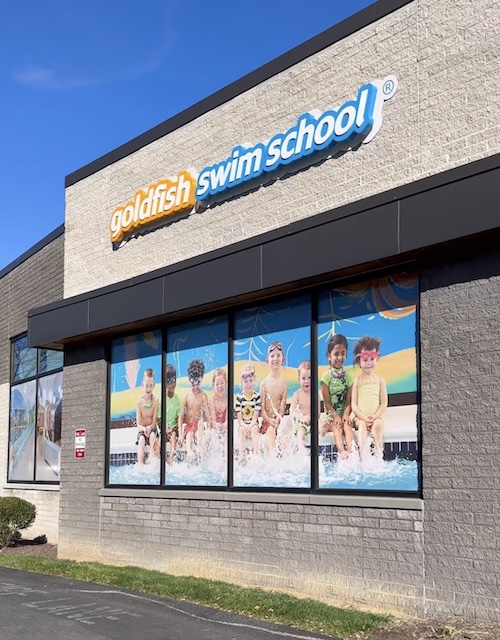
We’re proud to collaborate on the topic of water safety withGoldfish Swim School in Wexford. They offer swim lessons for children ages 4 months to 12 years old in a fun, safe, and nurturing environment. Their trained instructors use a confidence-building curriculum that helps kids become strong, safer swimmers at every age and stage.
If you're local, this is a great opportunity to get your child comfortable in the water and reinforce good safety habits early.
When researching swim schools, look for small class sizes, certified lifeguards, a curriculum that prioritizes water safety, and instructors who work well with kids.
Goldfish Swim School has been serving the Wexford community for over 11 years, with a mission to make—and keep—swimmers safer in and around the water.
They offer:
4:1 student-to-teacher ratios
Ellis & Associates certified lifeguards on duty
Continuous evaluations from deck supervisors
Free W.A.T.E.R. safety presentations for schools and community groups
Participation in national events like the World's Largest Swim Lesson
“As a Goldfish mom myself to a 5-year-old and 2-year-old, this program works,” said Artisti. “Both of my children have been in the water since they were 3 months old. My oldest is now almost on our swim team, and my 2-year-old is in advanced baby classes, swimming independently for up to 10 feet. I believe in it—not just as an employee, but as a mom. If you stick with it, it could save your child’s life.”
%20(1).png)

.png)
%20(2).png)
%20(14).png)
%20(14).png)
%20(14).png)